This is an interactive essay. Tap any paragraph to add your own commentary.
Listen to this essay
A quick note for non-nerds: A "Killer App" in the tech world is a feature or application that justifies the entire system. Below, I argue that one of the (many) justifications for the AI revolution is that it gets us meaningfully back into the real world. ♡ - William, a nerd.
I'd like to share two stories with you.
The first begins on Friday, April 24th, on a dark night in an otherwise forgotten corner of Brooklyn. It's a story about a party.
But not just any party. On this night, we took over an oversized classic loft on the Brooklyn waterfront and snuck in a few hundred artists, music aficionados, the curious, and the creative for a private art party headlined by one of the most talented artists working today. Anderson .Paak. He performed under his DJ alias DJ Pee.Wee, playing alongside stilt walkers, ballerinas, artists, and DJs, with an immediacy and intimacy that felt like a throwback to another era.
It felt less like a show at a venue and more like the kind of party you heard stories of… a throwback to the New York of the 1970's. But this time, the art party featured a Grammy winner.
It was one of those New York City nights that felt rare. And in a wild way, it was made possible by AI.
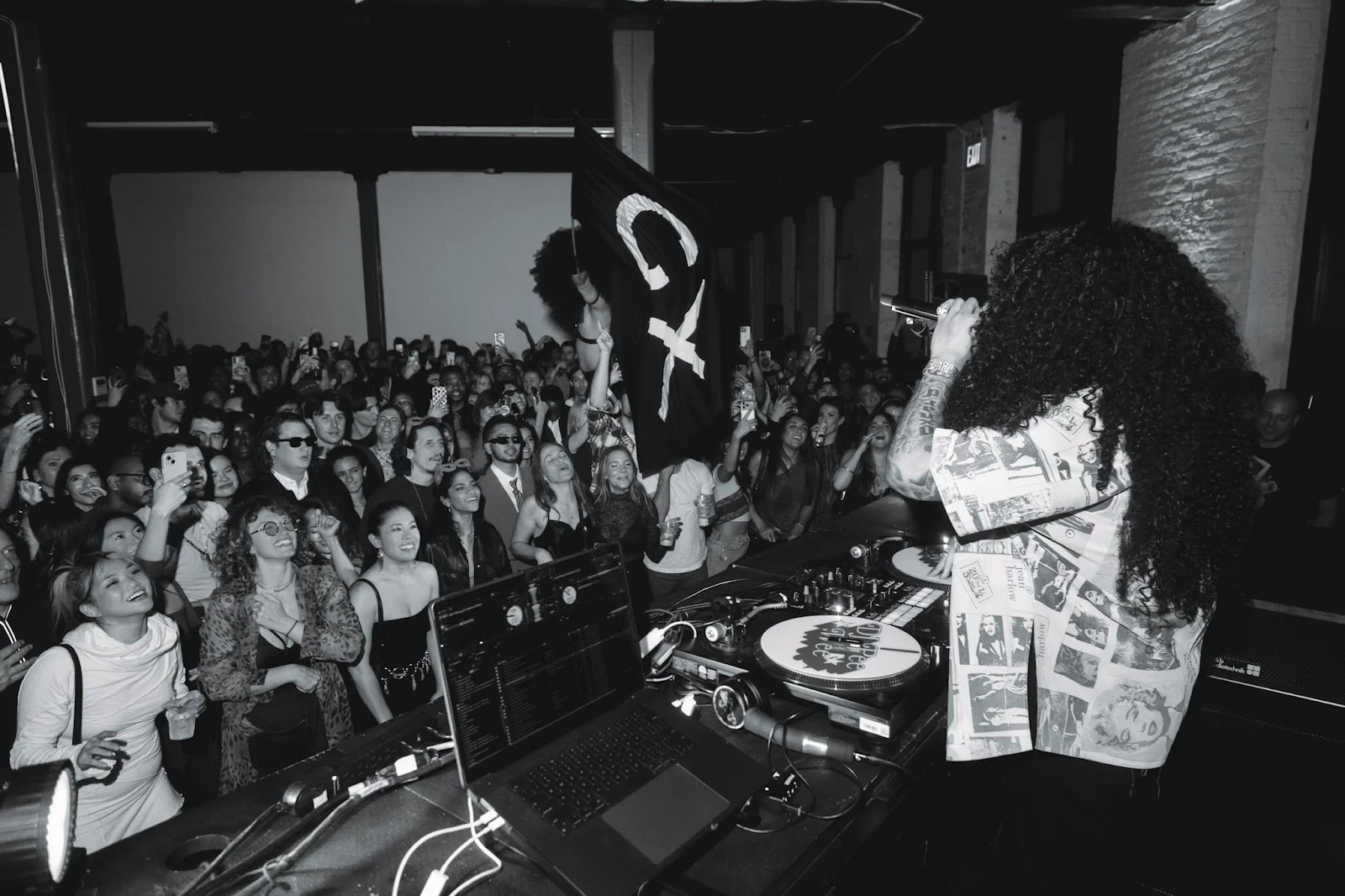
Photos from our opening night by @alizayuh
That night was the public launch of a project my team and I have been quietly building in stealth for the past few years: a callback to old New York, a private network of curious people who gather inside forgotten spaces across the City to build the kind of creative-forward, conversation-focused nights that recent generations fear they missed out on.
Now, here's the second story.
A couple of months before that night, my partner and I welcomed our daughter into the world. In those first dazed weeks of newborn parenthood, while this little tiny creature slept contentedly on my chest, I built the prototype of the technology system that now ties our entire network together.
The AI agents wrote the code, while I designed, directed, reviewed, corrected, iterated… and at the same time, rocked and soothed my newborn daughter.
I built a fully fleshed-out product via text messages, and the nerd in me is still dumbfounded that this is even possible.
55.8%
faster with AI tools
Software developers using AI tools completed tasks 55.8% faster than those without.
Source: Oxford
40%+
higher quality output
BCG consultants using LLMs completed 12.2% more tasks, 25.1% faster, and produced work judged over 40% higher quality.
Source: Harvard Business School
A few years ago, the same build would have required hundreds of thousands of dollars and a team of engineers, designers, and product managers slogging through product specs, design sprints, development sprints, QA cycles, late nights, early mornings, and months of delay. I know this because I built a venture-backed app back in that archaic era of just a few years ago. It was slow, painful, expensive, and only a middling success.
To build another app that way would have taken me away from my daughter during one of the most precious periods of life. More likely, I wouldn't have attempted it at all.

Photos from our opening night by @alizayuh
That full-stack development while caring for a newborn is a personal story, but it isn't isolated. I, like many of you, hate AI writing. This essay was written by hand with all the oddities and foibles that come with it… but I'd be lying if I told you I didn't use AI to refine and research it.
After all, AI is only magic(ish). It is not a replacement for judgment and taste. It doesn't have consequences or accountability. These qualities are, in my view, necessarily human. In the end, we want to agree with or yell at a real living person who can disagree and yell back. But when used well, these tools might just create a productivity explosion that can give us all back meaningful time.
...and time is life.
I tell these two stories because the public conversation about AI is, at the moment, almost entirely one-directional. The fear and loathing have risen to a fever re: lost jobs, surveillance, deepfakes, concentration of power, the erosion of human agency. These fears are real, and they deserve serious, honest dialogue.
~40%
of global jobs exposed to AI
The IMF estimates that almost 40% of global employment is exposed to AI, rising to about 60% in advanced economies.
Source: IMF
But we can take these concerns seriously while also putting our pitchforks back in the barn. I want to invite the artists and creators, the academics and technologists, to leave a little room to imagine the possible… even as we navigate the thorny issues this revolution brings.
Let's imagine the possible.
At the risk of stating the obvious, the last quarter-century of consumer technology has left a lot to be desired. Many of us feel suckered by the smiling wunderkids and the shiny social apps they gave us (for free!). We were promised a connection machine, a solver of problems, a pathway to a more human future. Instead, we got a slot machine. Worse, the "social" internet is a slot machine that's rigged against us. It's built into the structure of the product.
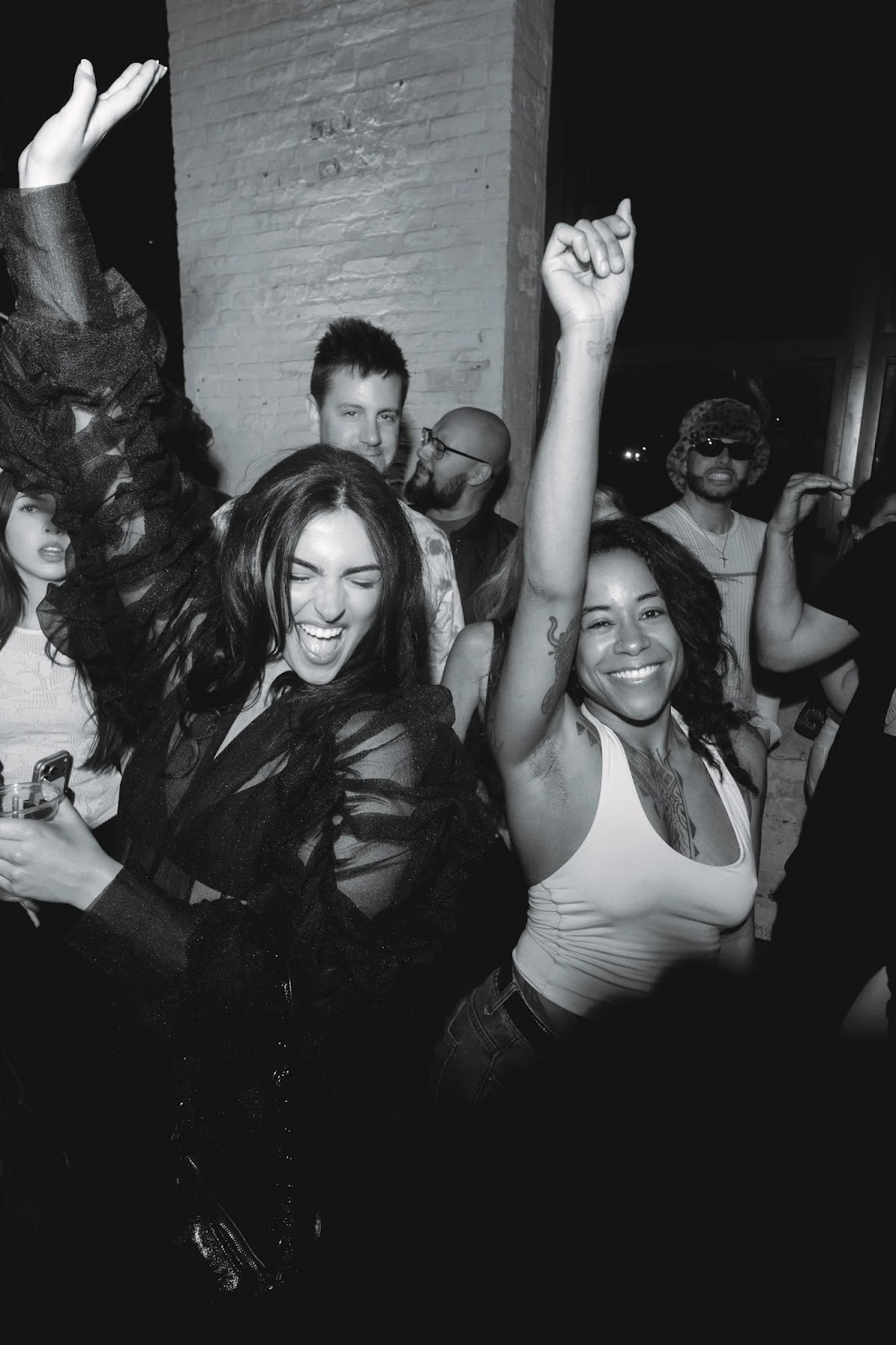
Photos from our opening night by @alizayuh
The phone-and-feed era was built around a single objective: turn people into data, turn data into ad targeting, and turn ad targeting into revenue. The ecosystem depended on keeping your eyes on the screen. Attention was the currency, and you were the product.
$294.6B
in U.S. digital ad revenue
U.S. digital advertising reached $294.6 billion in revenue in 2025 — one-third of a trillion dollars built on harvesting attention.
Source: IAB
However, what is emerging now is structurally very different.
Agentic AI does not run on your attention. It runs on your intent.
A feed asks, "How do we keep this person here for as long as possible?" An agent asks, "What does this person want done, and how can I do it for them?" The first traps you in the attention machine, while the second lets the machine work for you while you go live your life.
The future is going to be messy, and I'm not pretending the difficulties of this era are small. But my point here is not to hide from the future, nor to fight it.
What we are seeing right now is much closer to the historic dream of human-computer symbiosis, what Licklider called "formulative thinking" and Engelbart called augmented intellect, than the attention-sucking of the social feed.
Originally, we hoped computers would extend our agency, not become attention casinos.
And now, for the first time in a long time, technology and culture may actually want the same thing.
Most of us want to get off the screens and back into the face-to-face, beautiful, messy real world that human life was intended for. We want rooms… we want music… we want overheard conversations, glances across crowded spaces, flirtation with strangers, and wild arguments about important subjects (like the last Knicks game or this season of Drag Race), as well as those wild performances that you had to be there to understand.
We want the feeling of being carried away by a crowd.
There is a strange and beautiful electricity when you have bodies together in a shared space.
And the hunger for that is not just nostalgia. It is a response to a measurable social deficit.
-20 hrs
monthly time with friends
From 2003 to 2020, Americans spent 24 more hours per month alone, while time with friends fell by 20 hours per month.
Source: U.S. Surgeon General
45%
more time alone for young Americans
Americans aged 15–29 spent about 45% more time alone in 2023 than in 2010.
Source: Our World in Data
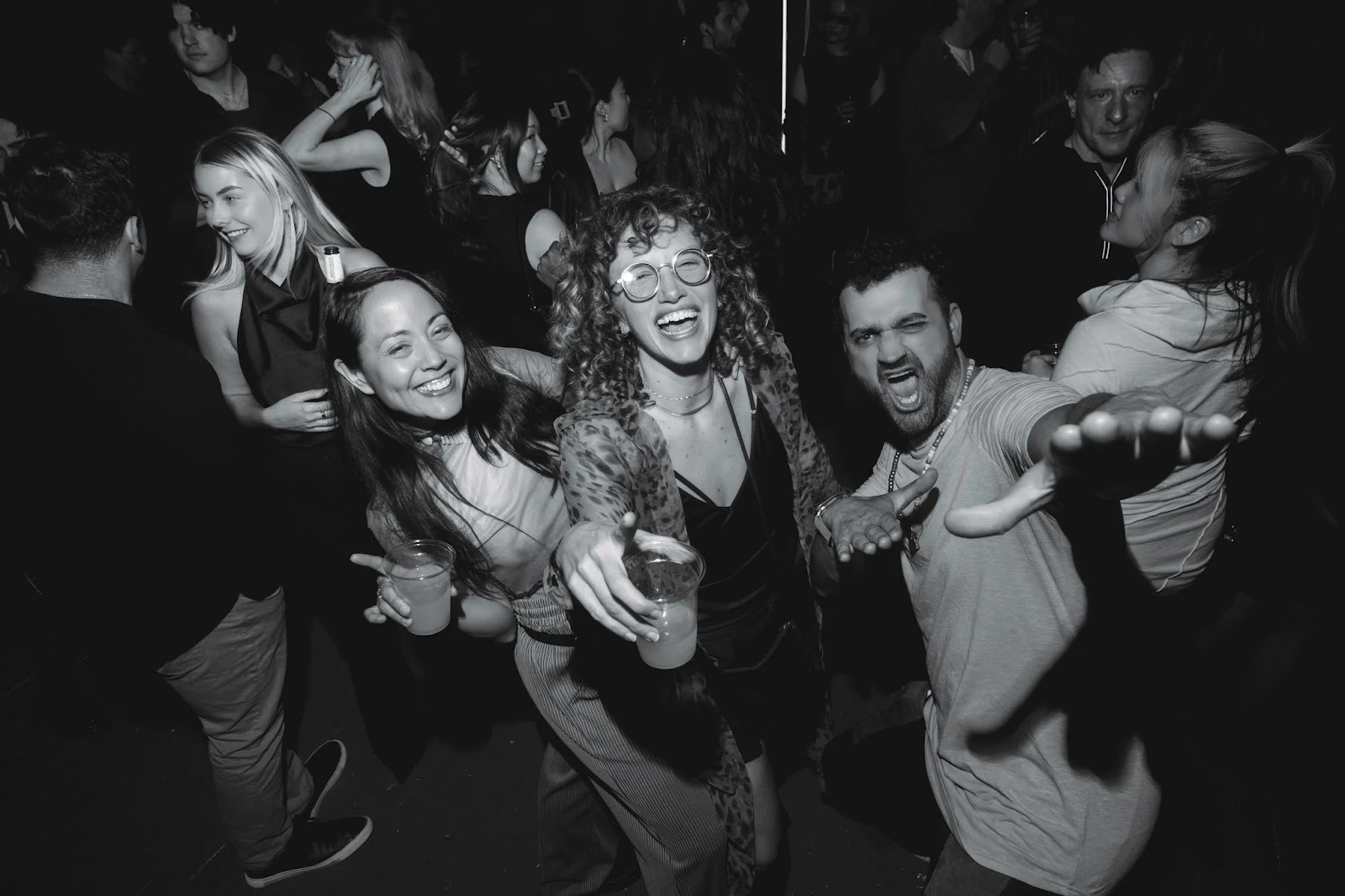
Photos from our opening night by @alizayuh
So when I say the real world may be the killer app for AI, I don't mean that as a cute paradox. I mean it literally.
Over the past year, I've gone deep. I've built as much as I can with agentic tools: AI agents that write and refactor code, inspect logs, use APIs, draft copy, debug workflows, organize operations, and pass work back to me for review.
Agentic systems are far from perfect; we absolutely need humans in the loop to make the AI code releasable. But it has saved us hundreds of hours of development and operations time that used to swallow entire weeks of life.
And the results, for us, have been stunning. We are now able to pull off nights like the private party with Anderson .Paak with systems that would have been impossible for a tiny team just a year ago.
I feel like this part of the AI story, what we can imagine might be possible, simply isn't being told enough.
Yes, certain kinds of work will be displaced, and there are real infrastructure issues that we should plan for.
But on the other side of this transition is something I'd hope the artists, creators, musicians, and writers reading this might actually want: more energy, more attention, and more dollars flowing toward the real world… the live, the embodied, the beautiful, the messy, the human.
We are at the edge of a strange and beautiful possibility: that AI, the technology so many people fear will make life more artificial, may actually help make life more physical again.
So consider this an invitation.
The tools are here. If you haven't gone deep yet, you might be surprised by the possibilities. Let's not be naive to the challenges, but let's also not be afraid of the future. This is our collective moment to imagine the possible, and then go forth and make it.
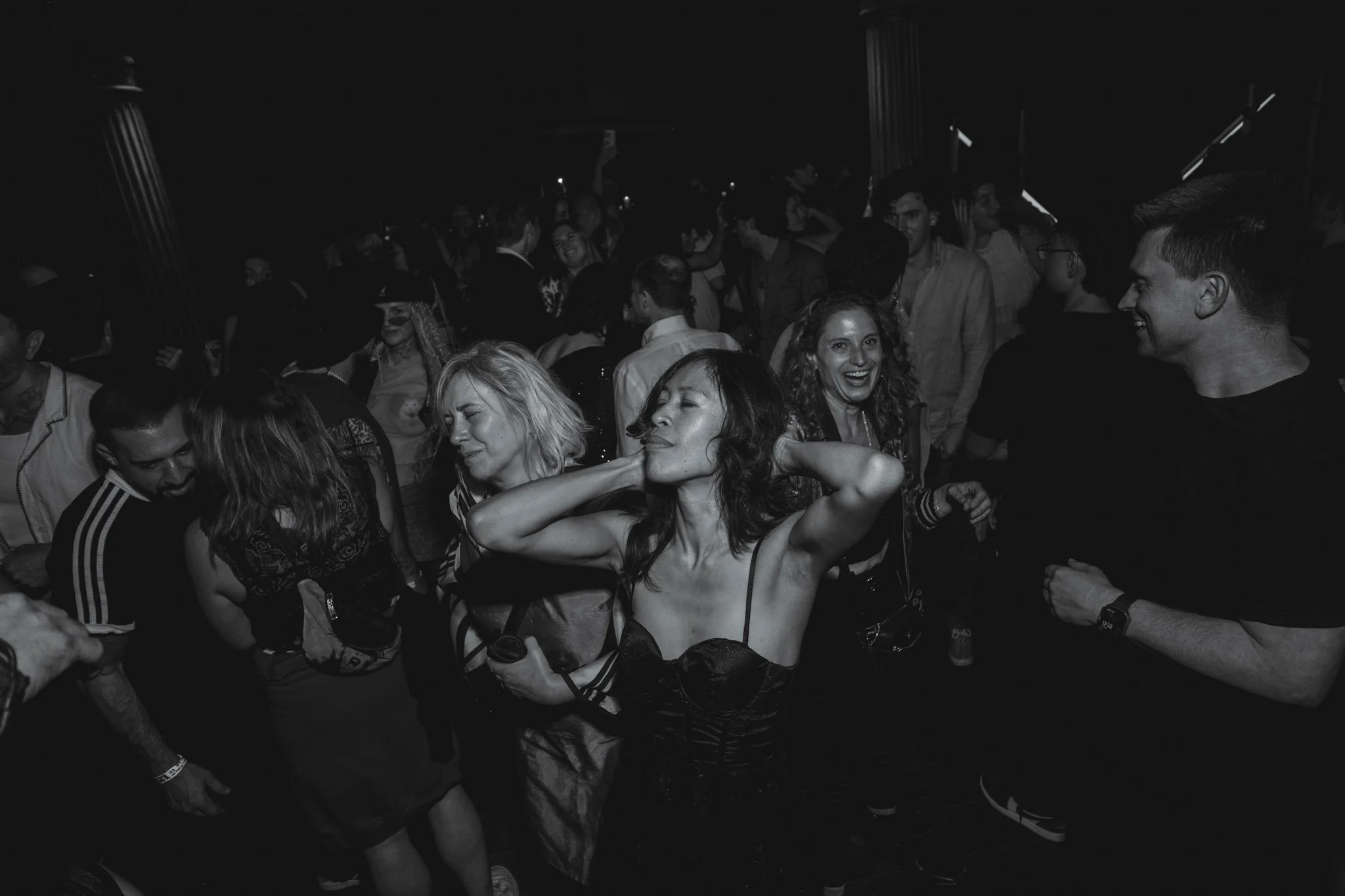
Photos from our opening night by @alizayuh
William is the founder of CX — a private network of edge-seekers & the intellectually promiscuous who come together at secret events hosted across New York City (and soon beyond…) all coordinated via our AI concierge, Cléo Xóchil. To join, introduce yourself here. To learn more about the company, view our deck.